



Capital gains tax in India doesn’t feel hard because it’s complex. It feels hard because it’s date‑sensitive and asset‑specific. Equity, property, gold, and debt funds all follow different rules that have changed recently. This guide gives you a calm, step‑by‑step way to get it right: first identify the asset → then the holding period → then the correct tax bucket.
Step 1 — Two words that decide your tax: STCG vs LTCG
• STCG = Short‑Term Capital Gain (held for a shorter period)
• LTCG = Long‑Term Capital Gain (held longer)
Holding‑period quick rule (post 23 Jul 2024 changes):
- Listed equity / equity mutual funds / business trusts → LTCG after 12 months; else STCG.
- Most other assets (property, gold, unlisted shares, debt funds bought before 1 Apr 2023) → LTCG after 24 months; else STCG.
Step 2 — The only table you need (India 2026 quick rules)
| Asset Type | STCG (Holding ≤ threshold) | LTCG (Holding > threshold) | Practical Notes |
| A) Listed Equity Shares & Equity Mutual Funds (STT paid) | 20% (if held ≤ 12 months) — Sec 111A | 12.5% above ₹1.25 lakh exemption — Sec 112A | Year‑end gain‑harvesting can optimise the ₹1.25L exemption; check STT conditions & 31‑Jan‑2018 grandfathering for older holdings. |
| B) Debt Mutual Funds | If units bought on/after 1 Apr 2023: Slab rate regardless of period (deemed STCG via Sec 50AA). Older units: slab if ≤ 24 months. | Older units (bought before 1 Apr 2023): 12.5% without indexation if held > 24 months (for transfers on/after 23 Jul 2024). | Post‑Apr‑2023 debt funds behave tax‑wise like FDs; keep purchase dates handy when redeeming. |
| C) Real Estate (Property / Land) | Slab rate (if held ≤ 24 months) | 12.5% without indexation (if held > 24 months). For property acquired before 23 Jul 2024, you may compare with old 20% with indexation and pay the lower tax. | Section 54/54F/54EC still available (timelines apply). Most mistakes happen due to missed reinvestment windows. |
| D) Gold (Physical, Digital, ETFs, Gold Mutual Funds, SGB) | Physical/Digital/Gold MF: Slab if ≤ 24 months. Gold ETF: Slab if ≤ 12 months. SGB: sale on market — slab or 12.5% based on holding. | Physical/Digital/Gold MF: 12.5% if > 24 months. Gold ETF: 12.5% if > 12 months. SGB: redemption exemption now restricted to original subscribers holding till maturity (Budget 2026); others taxed. | Gold ETFs can achieve LTCG status in just 12 months. Note new SGB rules effective April 1, 2026; interest (2.5%) is always taxed at slab. |

Step 3 — The simple calculation most people forget
Capital Gain = Sale Price – (Cost of Acquisition + Transfer Expenses + Eligible Improvements)
For property, do include brokerage, legal fees, stamp/registration on sale (if borne by seller), and documented improvement costs missing these leads to silent overpayment.
Step 4 — 3 mistakes Indians make every year (and the fixes)
Mistake 1: Mixing up “date of purchase” and “date of redemption” (vital for debt funds and rule cut‑offs).
Fix: Maintain broker/AMC capital gain statements and tag units by purchase date buckets.
Mistake 2: Missing the ₹1.25 lakh LTCG exemption on equity.
Fix: Use year‑end harvesting where it fits your plan book gains up to the exemption while staying invested.
Mistake 3: Property exemption timelines missed (54/54F/54EC).
Fix: Set calendar reminders for purchase/construction/bond windows and use the Capital Gains Account Scheme if needed.
A practical 5‑minute checklist before you sell anything
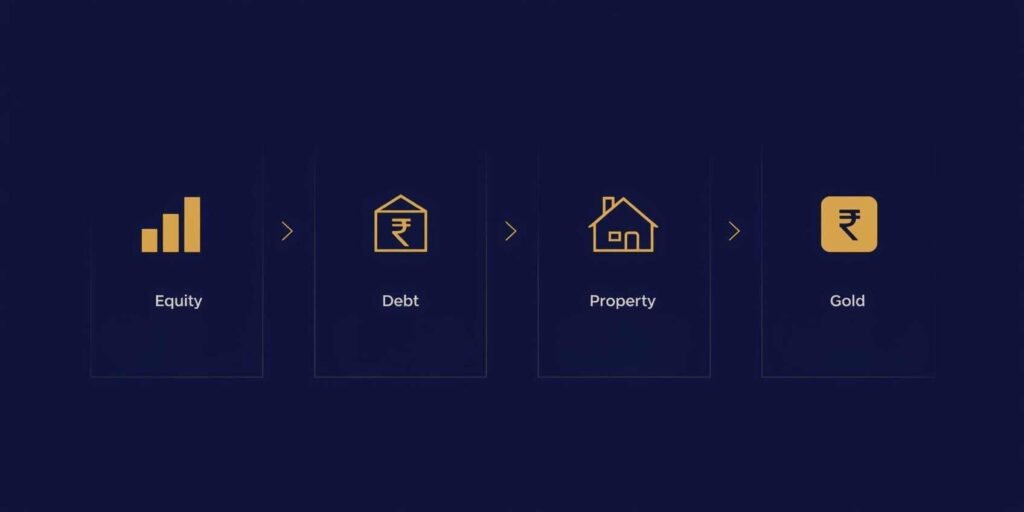
- What asset is it (equity/debt/property/gold)?
- What’s the holding‑period threshold here (12 months or 24 months)?
- Which tax bucket applies (Sec 111A / 112A / slab / special rules)?
- Do I have any carry‑forward losses to set off? (respect set‑off rules)
- If property, do I qualify for 54/54F/54EC —> and am I within timelines?
FAQs
1) What is the LTCG exemption on listed equity now?
₹1.25 lakh per financial year. Gains above this are taxed at 12.5% under Section 112A, subject to STT and other conditions.
2) How are debt mutual funds taxed after 1 Apr 2023?
Units purchased on/after 1 Apr 2023 are taxed at your slab rate regardless of holding period (deemed STCG via Section 50AA). Older units sold after 23 Jul 2024 can get 12.5% LTCG if held >24 months.
3) Can I still claim indexation on property?
For transfers on/after 23 Jul 2024, LTCG is generally 12.5% without indexation. But if the property was acquired before 23 Jul 2024, you may compute tax under old 20% with indexation and pay the lower amount.
4) How is gold taxed (physical vs ETF vs gold funds)?
Physical/digital/gold MFs: LTCG at 12.5% after 24 months; otherwise slab. Gold ETFs: LTCG at 12.5% after 12 months; otherwise slab.
5) What changed for Sovereign Gold Bonds (SGBs) in 2026?
From April 1, 2026, tax‑free redemption applies only to original subscribers who hold till maturity. Secondary‑market buyers (and premature redemptions) won’t get the exemption; interest (2.5%) remains taxable at slab.
Disclaimer
This content is for educational purposes only and is not financial, tax, or investment advice. Tax law changes quickly; consult a SEBI‑registered advisor and/or a qualified tax professional for personalized advice.